
Ask ten Moroccans which city is greater — Marrakech or Fes — and you will start ten arguments. These are our two grand imperial cities, both walled, both ancient, both UNESCO World Heritage, and both fiercely proud. But they are not the same place wearing different clothes. Marrakech is theatre: red walls, palm trees, snake charmers, rooftop sunsets and a current of energy that pulls you in. Fes is a thousand-year-old library you can walk through: the spiritual and intellectual soul of the country, where craftsmen still work in lanes too narrow for a car. I was born in the Atlas and live in Marrakech, but my mother's family is from the north and I have spent half my life going to Fes. This is the honest comparison I give travellers who only have time for one — and the reasons most of you should make time for both.
The quick answer
If this is your first trip to Morocco, go to Marrakech: it is easier, livelier, far better connected by air, and the natural launchpad for the Sahara, the Atlas Mountains and the coast. If you are a history, culture or crafts traveller who wants the most authentic medieval medina in the Arab world — and you don't need nightlife — choose Fes. And if you have seven days or more, stop choosing: do both, ideally with a desert journey linking them. They are different enough that seeing one is not seeing the other.
Easier to navigate, more to do, the best flight connections, and the gateway to the desert.
Morocco's oldest imperial city and the home of its oldest university — living medieval heritage.
Rooftop lounges, cocktail bars and clubs in Gueliz and Hivernage — Morocco's liveliest evenings.
A working, lived-in medina with little tourism gloss — the closest thing to time travel in Morocco.
Sahara, Agafay, the High Atlas, Essaouira and the waterfalls are all within easy reach.
Tanneries, zellige tile, brass and Fassi blue pottery, made at the source by master artisans.
Don't think of it as Marrakech versus Fes — think of the order. Most travellers love Marrakech first because it eases you into Morocco, then find Fes hits harder and deeper once they understand the country a little. If I had to send a nervous first-timer to just one, it's Marrakech. If I had to send a return visitor who "did Marrakech" and felt they missed something, it's Fes, every time.
The Two Cities at a Glance
Two imperial capitals, three hundred years and a mountain range apart in spirit. Here is the shape of each before we get into the detail.
Marrakech was founded in 1070 by the Almoravids and grew into the great southern capital — a caravan city where the trans-Saharan trade routes met the Atlas Mountains. They call it the Red City for the rose-coloured earth its walls and buildings are made from, and at sunset the whole medina glows. It is Morocco's tourism capital and, for most of the world, the country's public face: Jemaa el-Fnaa square, the souks, the palaces and gardens, the riads, the rooftop restaurants, and beyond the walls the palm groves, the desert and the snow-tipped Atlas. It is hot, dramatic, cosmopolitan and built to be enjoyed.
Fes is older and quieter and, many would argue, deeper. Founded in 789 AD by Idris I, it became the religious and intellectual heart of Morocco. Its medina, Fes el-Bali, is a UNESCO World Heritage site and the largest car-free urban area on earth — a labyrinth of some nine thousand lanes where mules still carry the loads and the rhythms of daily life have barely changed in centuries. This is where you find the Qarawiyyin, founded in 859 AD and recognised as the oldest continuously operating university in the world; the great madrasas; and the craft quarters where leather, brass, tile and pottery are made exactly as they were when the city was young.
| Marrakech | Fes | |
|---|---|---|
| Nickname | The Red City | The Spiritual Capital |
| Founded | 1070 (Almoravids) | 789 AD (Idrisids) |
| Best for | First-timers, energy, excursions | History, crafts, authenticity |
| Medina feel | Lively, polished, tourist-savvy | Ancient, working, immersive |
| Vibe | Cosmopolitan & theatrical | Traditional & conservative |
| Nightlife | The best in Morocco | Very limited |
| Getting there | Major international airport | Smaller airport, fewer routes |
| Gateway to | Sahara, Atlas, Agafay, coast | Volubilis, Meknes, Chefchaouen |
| Ideal stay | 3 days (+ excursions) | 2–3 days |
| Cost | Slightly higher | Slightly better value |
Both are "imperial cities"
Morocco has four imperial cities — former royal capitals — Marrakech, Fes, Meknes and Rabat. Marrakech and Fes are the two that have most kept their medieval medinas alive, which is exactly why travellers so often weigh them against each other. They are not rivals to a Moroccan so much as two halves of the same heritage.
Atmosphere & First Impressions
The single biggest difference between these cities is not what you see — it is how they make you feel the moment you step inside the walls.
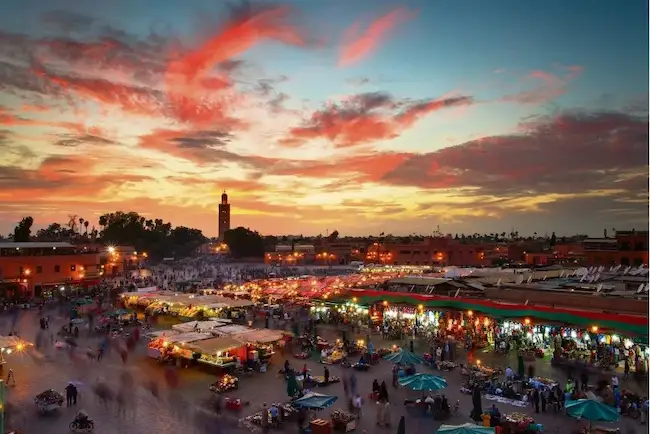
Marrakech grabs you. Within an hour you are dodging mopeds in the souk, being offered mint tea, watching orange-juice carts and snake charmers on Jemaa el-Fnaa, and squinting at the Koutoubia minaret against a hard blue sky. It is sensory overload in the best and most exhausting way — a city that performs for you, with all the warmth and all the hustle that implies. Step beyond the medina to Gueliz and you find wide boulevards, designer cafés, galleries and pools: a modern, confident, international city wrapped around an ancient one.
Fes does something different. It draws you in and then quiets you down. The medina is so dense, so enclosed, so untouched by cars that walking it feels like slipping back several centuries. You hear the tap of a coppersmith's hammer, the call to prayer echoing off close stone walls, the clack of a wooden loom behind a doorway. There are fewer tourists, fewer touts shouting in five languages, and far more sense that you are a guest in a living place rather than a customer in a marketplace. It can feel overwhelming too — the disorientation of those nine thousand lanes is real — but it is the overwhelm of depth, not of noise.
Marrakech
Electric, extroverted and a little theatrical. Designed to delight and to sell. Easier to enjoy on a short trip, more polished, and with a modern city right beside the old one. The trade-off is more hustle and a stronger tourist sheen.
Fes
Introverted, atmospheric and profoundly old. It rewards patience and curiosity rather than instant gratification. Less hassle, more authenticity — but more disorienting, more conservative, and quieter once the sun goes down.
Culture & History
Both cities are open-air museums, but they tell different chapters of Morocco's story — and Fes holds the older, denser pages.
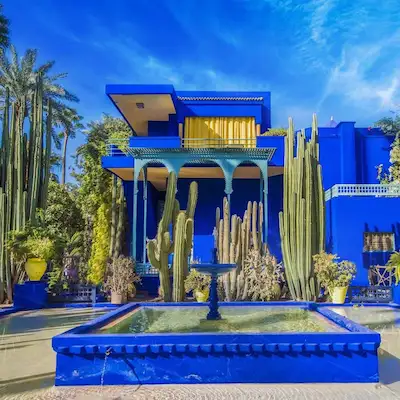
In Marrakech, history comes in set-piece monuments you can string together in a morning. The Bahia Palace dazzles with painted cedar ceilings and zellige courtyards; the ruined El Badi is grand and stork-topped; the rediscovered Saadian Tombs hide one of the most beautiful chambers in Morocco; the Ben Youssef Madrasa is a jewel box of carved stucco; and the Koutoubia minaret is the city's compass point. Add the cobalt dream of the Jardin Majorelle and the YSL Museum and you have a city that wears its culture beautifully and accessibly. If you want the highlights of Moroccan architecture in a compact, walkable package, Marrakech delivers.
Fes is on another level for sheer historical depth. This was the capital of learning for the whole western Islamic world. The University of al-Qarawiyyin, founded by Fatima al-Fihri in 859 AD, is recognised by UNESCO and Guinness as the oldest existing, continually operating degree-granting university on the planet. The Bou Inania and Al-Attarine madrasas are masterpieces of Marinid art — arguably finer than anything in Marrakech. The Kairaouine mosque is one of the largest and oldest in Africa. And all of this sits not behind glass but inside a working medieval city, alongside the tanneries, the dyers and the weavers who have practised here for a thousand years. Fes is less a collection of sights than a single, vast, living monument.
Marrakech
Spectacular, compact, easy to digest: palaces, tombs, a famous garden and a great madrasa, mostly within walking distance. Culture as a series of beautiful, accessible highlights.
Fes
The intellectual and spiritual heart of Morocco: the world's oldest university, the finest Marinid madrasas, and a medina that is itself a UNESCO masterpiece. Culture as total immersion.
Food & Dining
Both cities cook the great Moroccan canon — tagine, couscous, harira, pastilla — but they serve it with very different personalities.
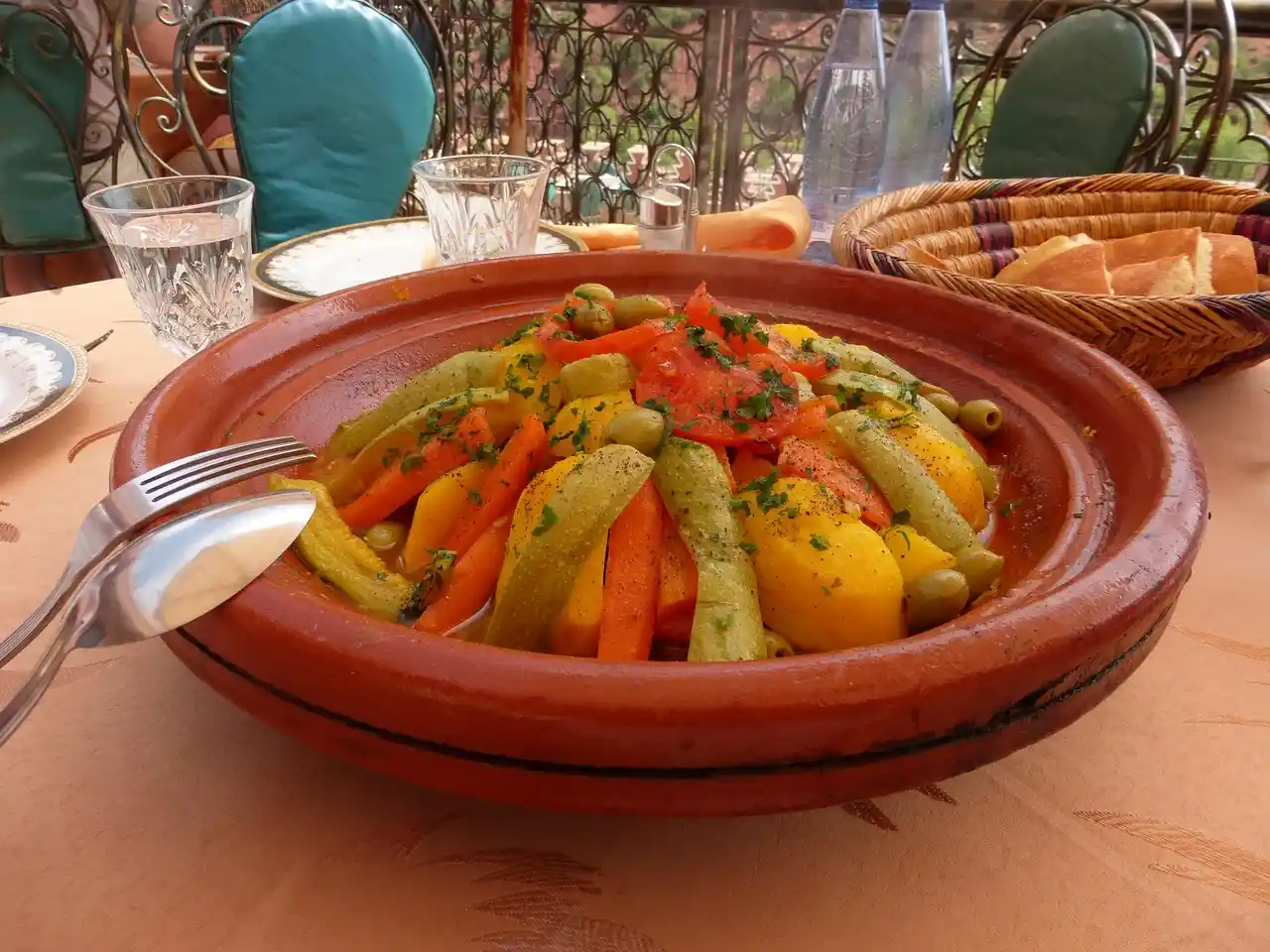
Fes is, by reputation, the culinary capital of Morocco. This is the home of the country's refined imperial court cooking — the elaborate, slow, deeply spiced family dishes passed down through Fassi households for generations. The most famous is pastilla (b'stilla), the extraordinary sweet-and-savoury pie of pigeon or chicken under crisp warqa pastry dusted with cinnamon and sugar, widely held to have been perfected here. Eating in a grand Fassi riad — course after course of mezze, a tagine that has cooked for hours, pastilla, then pastries and mint tea — is one of the great meals of the Arab world. The food in Fes is about tradition, subtlety and depth.
Marrakech has the more visible, varied and exciting food scene. Its signature is spectacle: the food stalls of Jemaa el-Fnaa firing up at dusk, snail soup and grilled skewers and mechoui roast lamb pulled from underground pits. It has its own iconic dish, the tanjia marrakchia — meat slow-braised in a clay urn in the embers of the hammam furnace, traditionally the bachelor's dish. And beyond the traditional, Marrakech has range Fes simply can't match: rooftop fine dining, fusion restaurants, cocktail-and-tasting-menu places, vegan cafés and international kitchens, especially in Gueliz. If you want a different cuisine every night, or a candlelit rooftop with a wine list, that is Marrakech.
Marrakech
Variety and theatre: legendary street food on the square, the local tanjia, plus the country's biggest range of rooftop, fusion and international restaurants. The best city to eat out.
Fes
Tradition and depth: the home of pastilla and refined imperial court cuisine, best experienced as a long, many-course feast in a Fassi riad. The best city to taste real Moroccan cooking.
Shopping & Souks
Both have legendary markets, but they reward different shoppers — one for design and choice, the other for craft at the source.
The souks of Marrakech are the most famous in Morocco and probably the most fun to browse: a vast, atmospheric maze north of Jemaa el-Fnaa, each lane once devoted to a trade — textiles, leather, lanterns, slippers, spices, carpets. The selection is enormous and increasingly design-forward, with concept stores and stylish boutiques sitting alongside traditional stalls. The flip side is that this is the most commercial shopping in the country: prices start high, the selling can be pushy, and a lot of what's on offer is made for tourists. Bargaining is a sport here, and you need your wits about you.
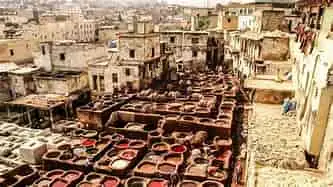
Fes is where you buy crafts at their source. This is the artisanal capital of Morocco, and in Fes you are often buying directly from the workshop that made the piece. The Chouara tanneries — those famous honeycomb vats of dye you view from surrounding leather shops — produce the leather sold right there. The city is renowned for its cobalt-blue Fassi pottery and hand-cut zellige mosaic tile, its hammered brass and copper, and its weaving. Prices tend to be a little lower, the selling is generally less aggressive than in Marrakech, and the connection to the maker is far more direct. It is less about choice and style, more about authenticity and craft.
Marrakech
The biggest, most varied and most design-led souks in Morocco — brilliant for browsing and for finding beautiful, contemporary takes on Moroccan style. Higher prices and harder selling.
Fes
Craft at the source: leather from the tanneries, blue Fassi pottery, zellige tile and brass, often bought straight from the artisan. Less choice and gloss, more authenticity and value.
Day Trips & Excursions
This is where Marrakech pulls decisively ahead for many travellers — its location is simply one of the best bases in Morocco.
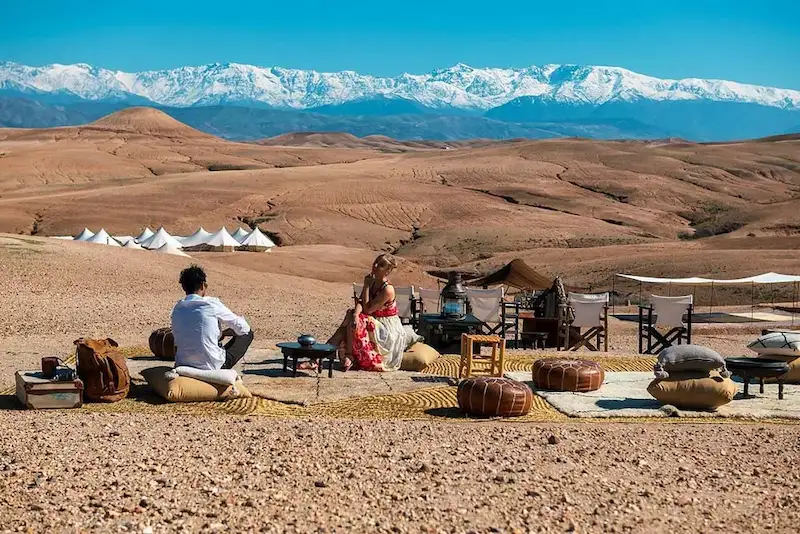
From Marrakech, the surroundings are extraordinary. In under an hour you can be in the Atlas Mountains among Berber villages, or in the lunar Agafay desert for a sunset and dinner under the stars. A little further lie the Ourika Valley and its waterfalls, the dramatic Ouzoud Falls, and the breezy Atlantic port of Essaouira. And Marrakech is the classic starting point for the great overland journey to the real Sahara — across the High Atlas, past Aït Benhaddou, to the giant dunes of Zagora or Merzouga. No other Moroccan city gives you mountains, desert and ocean within day-trip reach.
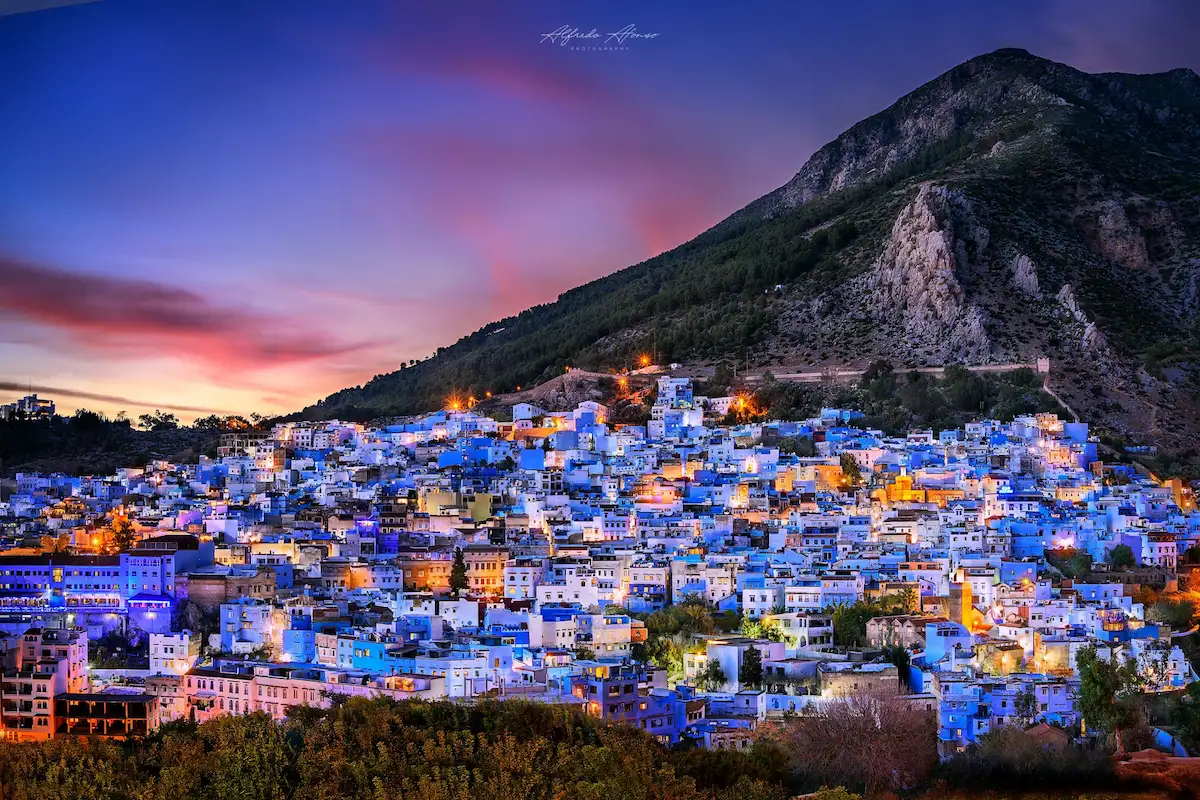
Fes has wonderful excursions too, just fewer of them and less famous. The standout is Volubilis, the best-preserved Roman ruins in Morocco, usually combined with the holy hilltop town of Moulay Idriss and the imperial city of Meknes — a superb day of history. Fes is also the most logical gateway to the blue city of Chefchaouen (around four hours north), and to the cedar forests, Barbary macaques and Alpine-feeling town of Ifrane in the Middle Atlas. Crucially, Fes is the usual endpoint of the Sahara journey from Marrakech, which is why so many itineraries run Marrakech → desert → Fes.
Marrakech
The best excursion base in Morocco: Atlas Mountains, Agafay, Ourika, Ouzoud, Essaouira on the coast, and the gateway to the Merzouga and Zagora Sahara. Mountains, desert and ocean all in reach.
Fes
Fewer but excellent trips: Roman Volubilis and imperial Meknes, the blue town of Chefchaouen, and the Middle Atlas cedar forests. The natural end of the Sahara route from the south.
Nightlife & Evenings
If evenings out matter to you, this section may settle the whole debate on its own.
Marrakech has the liveliest nightlife in Morocco, full stop. The modern districts of Gueliz and Hivernage are home to rooftop lounges, cocktail bars, live-music venues and genuine nightclubs that run until the early hours, alongside glamorous hotel bars and dinner-and-show restaurants. Even at the gentler end, the city does evenings brilliantly: sunset on a terrace over Jemaa el-Fnaa, a long candlelit rooftop dinner, the square itself buzzing with food stalls and musicians until late. Marrakech knows how to do a night out.
Fes is a far more conservative, religious city, and its nightlife is minimal by comparison. This is not a criticism — it is part of what makes Fes feel so authentic — but you should know it. Evenings here mean a beautiful dinner in a riad, mint tea on a terrace, perhaps a traditional music performance or a cultural show, and an early night. Alcohol is much harder to find, bars are few, and the medina goes quiet after dark. If your idea of a holiday includes cocktails and dancing, Fes will frustrate you; if it includes early starts and starry, peaceful nights, it will suit you perfectly.
Costs & Budget Comparison
Both cities are inexpensive by Western standards. The difference is at the margins — and Fes tends to be the better-value of the two.
Because Marrakech is the country's tourism hub, prices there run a little higher across the board: riads, restaurants, taxis and especially the luxury end, where Marrakech has a vast high-end scene that Fes barely touches. Fes, with fewer visitors, is generally a touch cheaper and offers strong value for accommodation and food, while still having lovely riads. That said, the gap is modest — both are affordable, and in either city you can travel comfortably on a mid-range budget. Here is a rough day-to-day comparison (in Moroccan dirham, MAD):
| Typical cost | Marrakech | Fes |
|---|---|---|
| Mid-range riad (double/night) | 700–1,400 MAD | 550–1,100 MAD |
| Luxury riad/hotel (night) | 2,000–6,000+ MAD | 1,500–3,500 MAD |
| Street-food meal | 40–80 MAD | 35–70 MAD |
| Mid-range dinner for two | 250–500 MAD | 200–450 MAD |
| Petit taxi across town | 20–50 MAD | 15–40 MAD |
| Monument entry | 70–100 MAD | 20–70 MAD |
| Comfortable daily budget | 600–1,200 MAD | 500–1,000 MAD |
Getting between them
You can fly Marrakech–Fes in about an hour, take the train (roughly 7 hours, scenic and cheap), hire a private driver, or — best of all — link them with a 3-day Sahara tour that runs Marrakech → Merzouga dunes → Fes, turning the transfer into the highlight of your trip.
Which City Is Better For You
The honest answer to "Marrakech or Fes?" depends entirely on who is asking. Here is how I'd advise different kinds of travellers.
Families
Marrakech is easier with kids: more space, pools at the riads and hotels, camel rides in the Palmeraie, the Agafay desert, gardens, and day trips that break up the city. Fes's dense, mule-trafficked medina is harder with strollers and small children — wonderful for older, curious kids, trickier for toddlers.
Couples
Both are romantic. Marrakech for sunset rooftops, luxury riads with pools, desert nights and a livelier scene; Fes for intimate, candlelit, historic evenings and quiet courtyards. Honeymooners often do a few nights in each, with a Sahara night between — the best of both.
Solo travellers
Marrakech is easier to land in solo: more travellers to meet, more nightlife, simpler logistics and great onward tours. Fes is rewarding solo too and arguably has less hassle, but it's quieter and more disorienting — better for a confident, independent traveller seeking depth over company.
Photographers
Both are dreams, but Fes edges it for raw, timeless images: the tanneries from above, dyers' lanes, craftsmen at work, light falling through ancient streets. Marrakech wins for colour and set-pieces — Majorelle blue, the souks, the square at dusk and golden-hour rooftops.
Luxury travellers
Marrakech is Morocco's luxury capital — world-class hotels, spa riads, fine dining, golf and the Agafay luxury camps. Fes has beautiful high-end riads and refined dining, but the depth and choice of true luxury simply isn't comparable.
History & culture lovers
If you came for the soul of old Morocco — the oldest university, the finest madrasas, living crafts and a medieval medina that still works — Fes is the one. It will reward a curious, patient traveller more deeply than anywhere else in the country.
Suggested Itineraries: 5, 7 & 10 Days
How to actually fit one or both cities into your trip. These are the routes I most often recommend, balancing the cities with the desert and the mountains in between.
5 Days One city, done properly
- Best approach: with five days, resist the urge to do both — the travel eats your time. Pick one city as a base.
- Marrakech route (recommended for first-timers): 3 days in the city (medina, palaces, souks, Jemaa el-Fnaa) + a 2-day Sahara or Zagora overnight, or two separate day trips (Atlas + Agafay).
- Fes route (for culture lovers): 2 days deep in Fes el-Bali + a day trip to Volubilis and Meknes + an overnight in Chefchaouen.
- If you must do both: 2 nights Marrakech, fly to Fes, 2 nights Fes — fast, but workable.
7 Days Both cities + the desert (the classic)
- Days 1–3: Marrakech — the medina, palaces and souks, plus one day trip to the Atlas or Agafay.
- Days 4–6: The great overland Sahara journey: over the High Atlas, Aït Benhaddou, the Dadès or Todra gorges, a night in the Merzouga dunes, then north toward Fes.
- Day 7: Arrive and explore Fes — the Qarawiyyin, the madrasas, the tanneries — and fly home from Fes.
- This is the single best one-week route in Morocco, and it turns the transfer between the cities into the highlight.
10 Days The full imperial & desert loop
- Days 1–3: Marrakech and its surroundings, unhurried (city + Atlas or Agafay).
- Days 4–6: The 3-day Sahara crossing to Merzouga and on to Fes.
- Days 7–8: Fes in depth, plus Volubilis and Meknes.
- Day 9: Chefchaouen, the blue city, from Fes.
- Day 10: Return south, or add Essaouira on the coast if you fly out of Marrakech. With ten days you see both cities, the desert, Roman ruins and the blue city without rushing.
Whichever route you choose, book the long desert leg and any flights for the middle of your trip, keep a buffer before your departure, and pre-arrange your airport transfers so you're never haggling with a taxi while watching the clock. If you'd like the Marrakech-to-Fes desert journey handled end to end, our multi-day guided tours run exactly this route with local drivers.
A Local's Honest Recommendations
A few things I tell friends that you won't always read in the guidebooks — from someone who genuinely loves both cities.
Do them in the right order
If you're visiting both, go Marrakech first, then Fes. Marrakech eases you into Morocco's energy, prices and rhythms; by the time you reach Fes you can appreciate its depth without being overwhelmed. Linking them with the Sahara journey in between is, to me, the perfect week in Morocco.
Get properly lost in Fes
Fes el-Bali is genuinely hard to navigate — even locals use landmarks, not maps. For your first morning, take a good licensed guide through your riad. After that, let yourself wander; the medina always slopes down toward the river and the main gates, so you're never truly lost.
Beat the heat and the crowds
Marrakech is brutally hot from June to September — do sights at 9 AM, rest at midday, return for sunset. Fes is a touch cooler and more humid. In both, the early morning medina, before the shops and tour groups, is the most magical and the most photogenic time of day.
Eat where it matters in each
In Marrakech, eat street food on Jemaa el-Fnaa where Moroccan families queue, and splurge on one rooftop dinner. In Fes, book one proper multi-course dinner in a traditional riad and order the pastilla — it's the dish the city is famous for and few do it better.
Buy crafts in Fes, browse in Marrakech
If you want serious leather, pottery, brass or zellige, buy in Fes, closer to the source and usually for less. Use Marrakech's bigger, more stylish souks for browsing, gifts and design pieces — and remember the fixed-price Ensemble Artisanal to learn fair prices before you haggle.
Respect the difference in dress
Both cities are conservative, but Fes more so — it's a deeply religious place. Dressing modestly (shoulders and knees covered, especially for women) is appreciated everywhere and makes a real difference to how warmly you're received in Fes in particular.
People ask me which city I love more and I never answer straight, because I love them for opposite reasons. Marrakech is where I'd take you to fall for Morocco — fast, warm, dazzling. Fes is where I'd take you to understand it. If you can only pick one, pick the one that matches the trip you want. But if you can stretch to a week, do both, with a night in the Sahara in between, and you'll go home having seen the real Morocco — not just its most famous postcard.
Marrakech & Fes in pictures

Frequently Asked Questions
Should I visit Marrakech or Fes?
If it's your first trip to Morocco, choose Marrakech — it's easier, livelier, far better connected by air, and the gateway to the Sahara, the Atlas and the coast. Choose Fes if you're drawn to deep history, traditional crafts and the most authentic medieval medina in the Arab world, and you don't mind a quieter, more conservative city. With a week or more, do both.
Is Fes more authentic than Marrakech?
Yes, in a real sense. Fes el-Bali is the largest car-free urban area in the world and remains a working medieval city where people live, study and practise centuries-old crafts much as they always have. Marrakech is authentic too, but its medina has been more shaped by tourism. If untouched, lived-in tradition is what you want, Fes delivers it more completely.
Is Marrakech too touristy?
It's the most visited city in Morocco, and the central souks and Jemaa el-Fnaa can feel busy and commercial, with more touts. But step a few lanes off the main routes, go early, or stay in a quiet riad and the real city is still very much there. Touristy doesn't mean fake — you just have to be a little more deliberate about finding the calm.
Can I visit both Marrakech and Fes?
Absolutely, and many travellers do. The classic route is a 3-day Sahara journey from Marrakech to the Merzouga dunes and on to Fes, which links the two cities through the desert. You can also fly between them in about an hour, take the train (around 7 hours), or hire a private driver. With 7 to 10 days you can comfortably see both plus the desert.
Which city is cheaper, Marrakech or Fes?
Fes is generally a little cheaper and better value. Because Marrakech is more touristic, riads, restaurants and taxis cost a bit more, and the high-end scene is far larger. Day to day both are inexpensive by Western standards — you can travel well in either on 500–800 MAD a day — but your money stretches slightly further in Fes. See our Morocco budget guide.
Marrakech or Fes for first-time visitors?
Marrakech, for most people. It's the gentlest introduction to Morocco — easier to navigate, with more to do, better infrastructure, the best flight connections, and unbeatable onward trips to the desert and mountains. Save Fes for when you've found your feet, or as the deeper second half of a longer trip.
Marrakech or Fes for couples?
Both are romantic in different ways. Marrakech offers sunset rooftop dinners, luxury riads with pools, desert nights and a livelier scene. Fes is quieter, more intimate and atmospheric — ideal for couples who love history and slow evenings. For a honeymoon, many couples combine a few nights in each with a desert night in between.
Marrakech or Fes for food?
Fes is widely considered Morocco's culinary capital — the home of refined imperial cooking and dishes like pastilla. Marrakech has the more visible scene: the street-food stalls of Jemaa el-Fnaa, its own tanjia, and a huge range of rooftop and international restaurants. Fes for tradition and depth; Marrakech for variety and spectacle.
Which city is better for culture?
Fes, clearly. It's Morocco's spiritual and intellectual capital, home to the world's oldest university and the finest Marinid madrasas, set inside a UNESCO-listed living medina. Marrakech has wonderful, accessible monuments, but for sheer depth of culture and history Fes is in a class of its own.
How many days do I need in each city?
Three days suits Marrakech well — two for the city, one for a day trip — while Fes rewards two to three focused days in the medina plus a trip to Volubilis or Chefchaouen. If you're combining them with the Sahara, plan on seven days minimum, ideally ten.