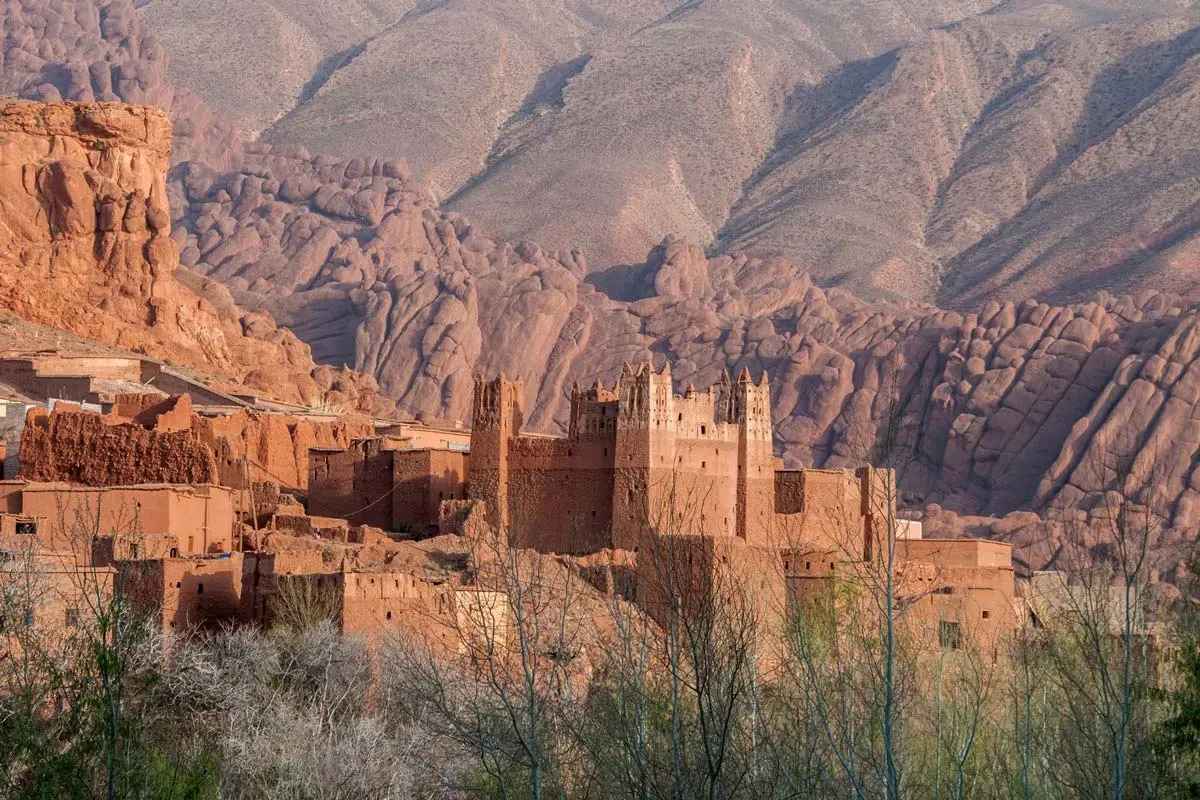
The Complete Guide · 2026

Sahara Desert Morocco

Erg Chebbi · Erg Chigaga · Merzouga · Zagora

Everything you need to know before visiting Morocco's most spectacular desert landscapes — the great dunes, the camps, the camel treks and the Berber culture — and how to turn it into the right trip for you.

150 mErg Chebbi dunes
MerzougaMain gateway
2–14 daysTrip lengths
Year-roundBest in spring/autumn
South-East Morocco Along the Algerian border, beyond the High Atlas
Erg Chebbi & Chigaga The two great Moroccan dune seas
9–10 h from Marrakech To Merzouga · 7 h to Zagora
Hot days, cold nights 40 °C+ in summer, near-freezing winter nights

What is the Sahara Desert?

The Sahara is the largest hot desert on earth — a vast expanse of sand, stone and sky stretching across North Africa from the Atlantic to the Red Sea, through more than ten countries. Morocco holds its dramatic north-western edge, and it is here, within reach of Marrakech and Fes, that travellers come to experience the classic Sahara of golden dunes, camel caravans and star-filled nights.

The Moroccan Sahara is not one single dune field but a patchwork of landscapes. Great seas of sand — known as ergs — rise beside rocky plains called reg, dry riverbeds, palm-filled oases and ancient mud-brick kasbahs. The two famous ergs, Erg Chebbi near Merzouga and Erg Chigaga near M'hamid, are where the sand piles into the towering dunes most people picture when they imagine the desert.

For most visitors, the Sahara is the moment Morocco becomes unforgettable: riding a camel into the dunes at sunset, sleeping in a desert camp under a sky thick with stars, and waking to a sunrise that turns the whole landscape to fire. This guide covers everything you need to know — where to go, when to visit, what to pack and how to plan the trip that suits you.
World's largest hot desert Roughly the size of the United States; Morocco holds its north-western corner.
Two great dune seas Erg Chebbi (Merzouga) and Erg Chigaga (M'hamid) — the postcard Sahara.
Oases & kasbahs Palm-lined valleys and mud-brick fortresses line the road to the sand.
Some of the darkest skies Little light pollution makes it a world-class place for stargazing.
9.2Mkm² of Sahara across North Africa
~150 mHeight of the tallest Erg Chebbi dunes
40 °C+Typical summer daytime heat
2 ergsMajor dune fields in Morocco

Where is the Sahara in Morocco?

Morocco's Sahara lies along the south and south-east of the country, where Morocco meets Algeria, beyond the barrier of the High Atlas and Anti-Atlas Mountains. To reach it you cross the mountains and follow the famous Road of a Thousand Kasbahs south through Ouarzazate and the valleys of the Dades and Draa. There is no true Sahara within a short hop of the coast or the imperial cities — reaching the real dunes is a journey, and that journey through changing landscapes is part of what makes it special.

There are three main gateways to the sand. Merzouga, beside the Erg Chebbi dunes, is the most popular and lies about 560 km (9–10 hours' drive) south-east of Marrakech. Zagora, in the palm-lined Draa Valley, is closer at roughly 360 km (7 hours) and offers the quickest taste of the desert. Beyond Zagora, at the very end of the tarmac in M'hamid, lies the remote Erg Chigaga, reached only by 4x4. Tours also run from Fes and Ouarzazate, which sit closer to Merzouga than Marrakech does.

Distances at a glance: Merzouga is a 9–10 hour drive from Marrakech, Zagora about 7 hours, and Erg Chigaga adds a further 1.5–2 hour 4x4 crossing beyond M'hamid. This is why the Sahara needs at least two days — and why most people travel with a driver rather than rushing it themselves. See how the routes fit together on our Morocco circuits page.

Merzouga vs Zagora

The most common question travellers ask is whether to head for Merzouga or Zagora. Both give you a genuine night in the Sahara with a camel trek and a desert camp — but they are quite different, and the honest answer comes down to how much time you have. Here is a straight comparison, with no spin.

  Merzouga (Erg Chebbi) Zagora (Draa Valley)
Drive from Marrakech≈ 9–10 hours (560 km)≈ 7 hours (360 km)
Minimum trip length3 days / 2 nights2 days / 1 night
The dunesTall, classic golden dunes up to ~150 mSmaller, flatter dunes (Tinfou, Erg Lihoudi)
Scenery en routeAït Ben Haddou, Dades Valley, Todra GorgeDraa Valley palm groves & kasbahs
Desert campsWidest choice, incl. luxury en-suite campsFewer, mostly standard camps
CrowdsMore visitors, but dunes are vastQuieter, more low-key
Best forThe iconic Sahara & best photosShort trips & limited time

The honest verdict

If you have three days or more and want the Sahara of your imagination — the huge, sculpted golden dunes, the best camps and the clearest stargazing — go to Merzouga. It is the longer drive, but the payoff is worth it and the route itself (Aït Ben Haddou, the Dades Valley, Todra Gorge) is a highlight reel of southern Morocco. If you only have two days, Zagora is the sensible choice: you still ride a camel, sleep in the desert and see the beautiful Draa Valley, without an exhausting drive. Choose Merzouga for the scenery, Zagora for the schedule.

Compare the actual trips side by side Merzouga and Zagora desert tours, with routes, nights and what's included.

View Desert Tours

Erg Chebbi & Merzouga

The towering golden dunes of Erg Chebbi rising above the desert near Merzouga, Morocco

Erg Chebbi is the most famous dune field in Morocco and the one that appears on almost every postcard of the Sahara. Rising from the flat desert beside the village of Merzouga, its dunes climb as high as 150 metres, shifting from pale gold at midday to deep orange and rose at sunset. Because the tarmac road runs right to the edge of the sand, Erg Chebbi is also the most accessible of the great ergs — a short camel trek or 4x4 ride takes you into the heart of the dunes and your camp for the night.

  • Tallest dunes in MoroccoUp to ~150 m, best explored on foot, by camel or by sandboard.
  • The best desert campsFrom atmospheric standard camps to luxury en-suite tents.
  • Superb stargazingClear, dark skies and the Milky Way overhead on moonless nights.
  • Gnawa music & villagesKhamlia and nearby villages keep desert music traditions alive.

Merzouga is the launchpad for the classic 3-day Marrakech to Merzouga desert tour and the one-way Marrakech to Fes route across the dunes. Around the erg you can also visit the seasonal Dayet Srji lake (home to flamingos after rain), meet nomadic families, and try quad biking or sandboarding. It is the right choice if you want the full Sahara experience and the best photographs.

Ready to see Erg Chebbi for yourself? The 3-day Marrakech → Merzouga tour is our most popular way to reach these dunes.

Merzouga Desert Tour

Erg Chigaga & M'hamid

Erg Chigaga is the wilder, more remote of Morocco's two great dune seas. Lying beyond the town of M'hamid at the very end of the paved road, it stretches for around 40 kilometres and its dunes rise higher than those of Zagora. Reaching it is an adventure in itself: a 1.5 to 2 hour 4x4 crossing over open desert and rocky plains, which is exactly why so few travellers make it here and why it feels truly off-grid.

  • 4x4 access onlyNo tarmac to the dunes — reached by off-road drive from M'hamid.
  • Bigger, emptier dunesA vast sand sea with far fewer visitors than Erg Chebbi.
  • Deep silence & dark skiesOne of the quietest, darkest places to spend a night in Morocco.
  • For the adventurousBest on a longer, tailor-made trip with time to reach it.
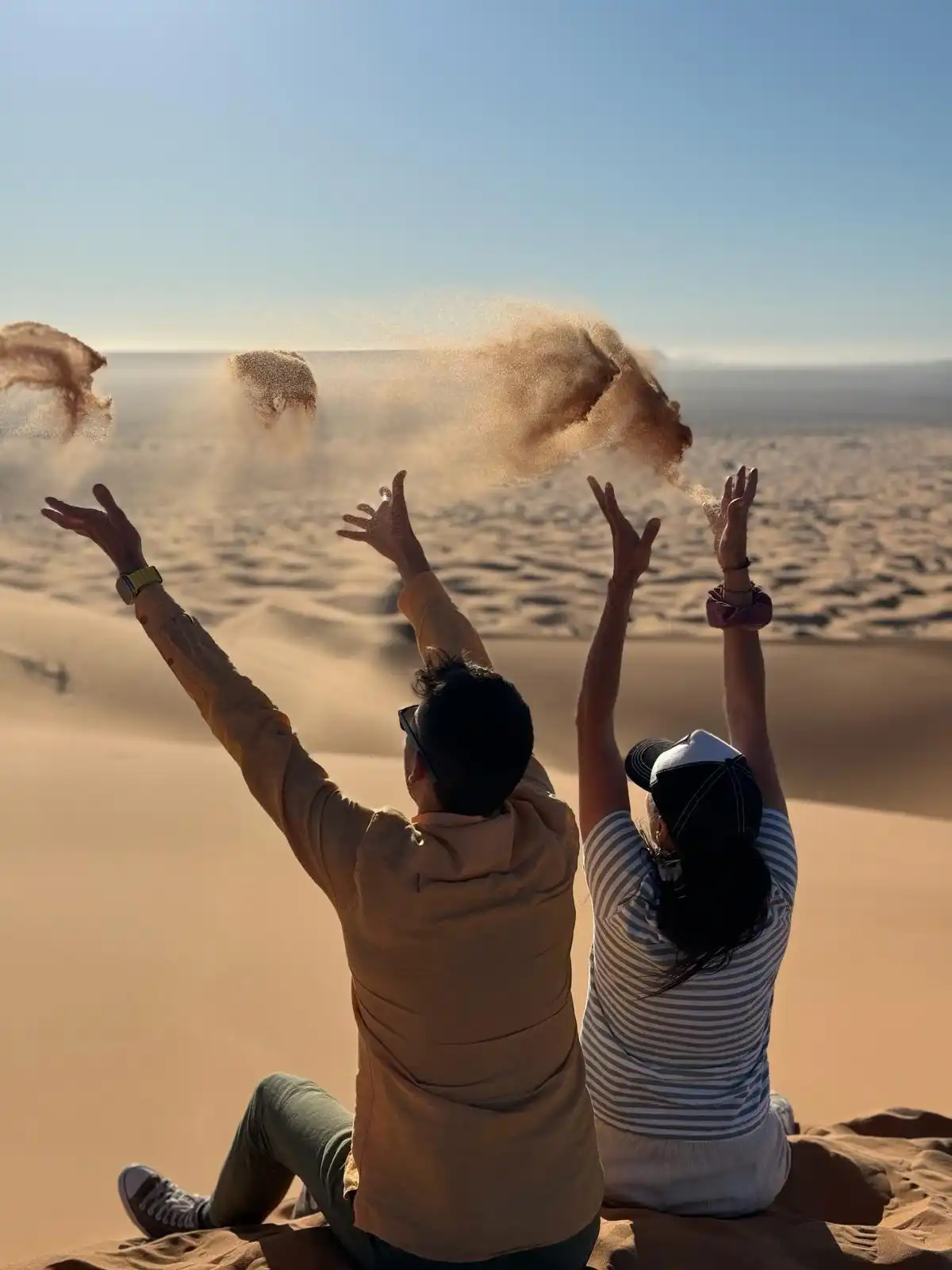
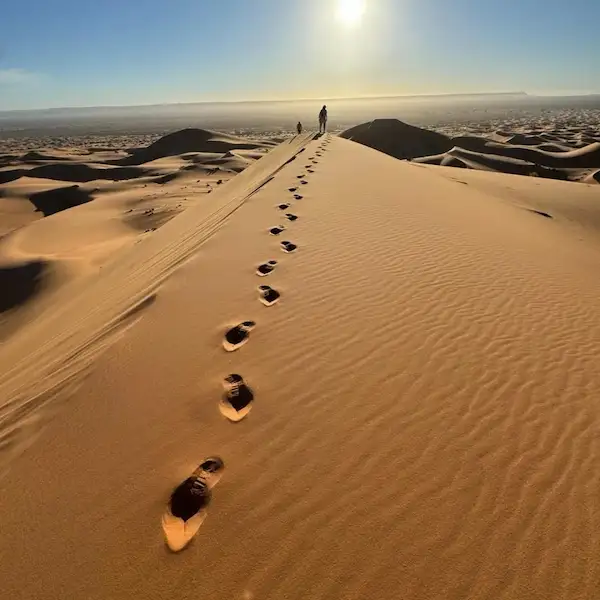
A traveller standing on top of a vast, remote Sahara dune, evoking the wild dunes of Erg Chigaga near M'hamid

Chebbi or Chigaga? Choose Erg Chebbi for iconic scenery with easy access, or Erg Chigaga for solitude and adventure if you have extra days and don't mind the rough drive. Chigaga suits a private, tailor-made tour rather than a standard group itinerary.

Best Desert Experiences

The Sahara is more than a view. These are the experiences that make a night in the desert unforgettable — most are included on a standard tour, and the rest are easy to add.

Camel Trekking

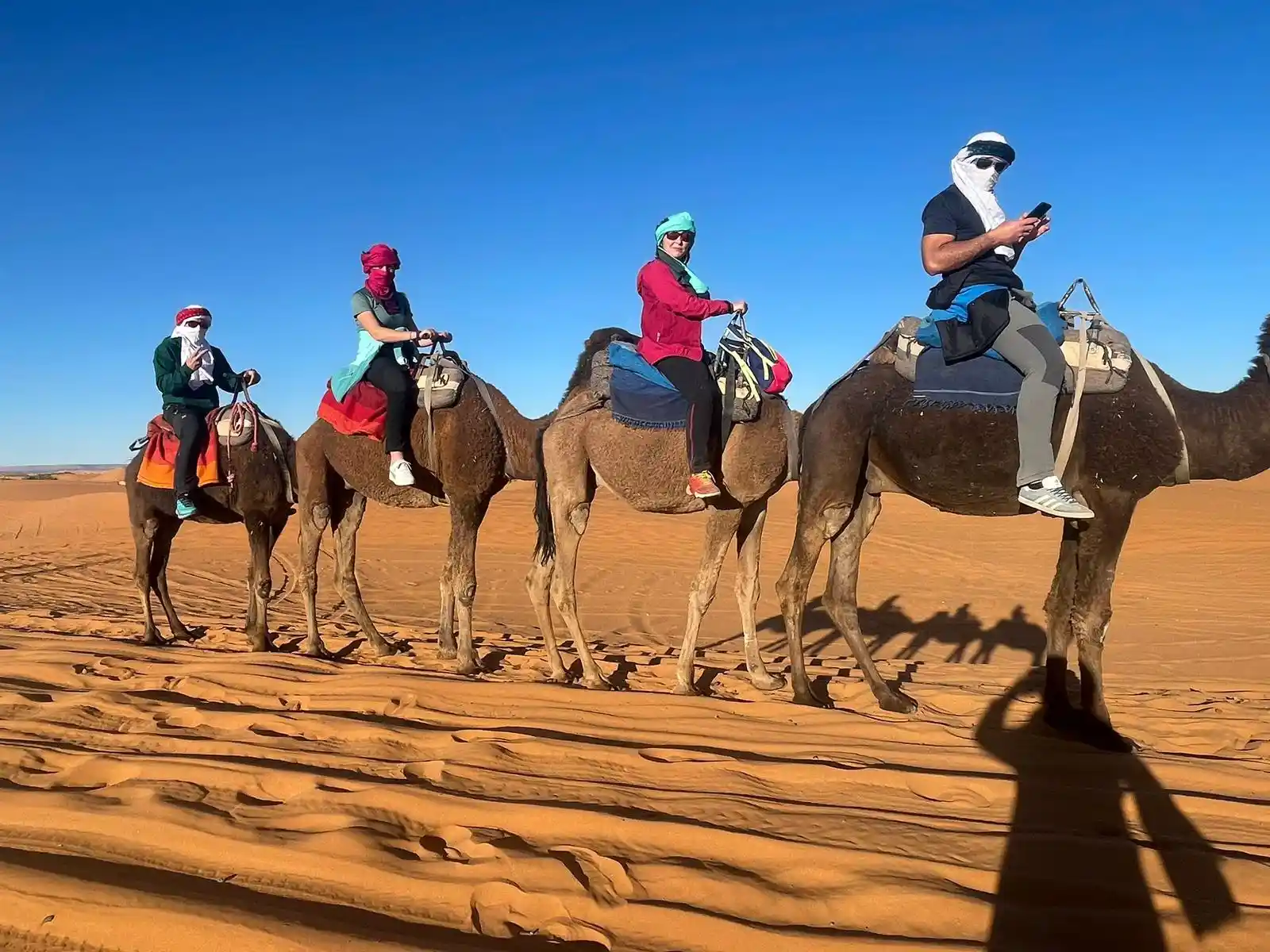
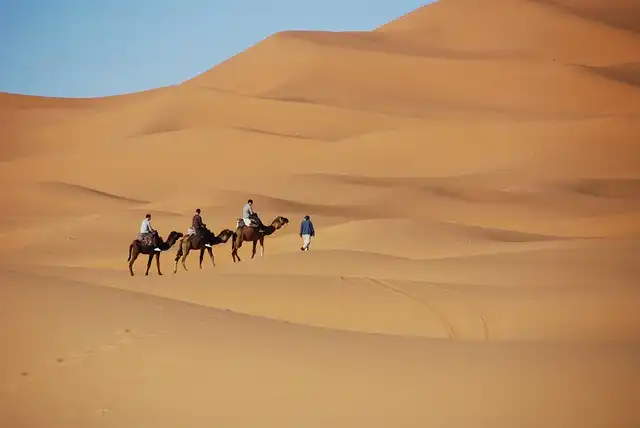
Ride a dromedary into the dunes at sunset and back at sunrise — gentle, beginner-friendly and the classic way to arrive at camp.

Desert Camps

Sleep among the dunes in a tented camp, from cosy standard tents to luxury en-suite camps with proper beds.

Sunrise

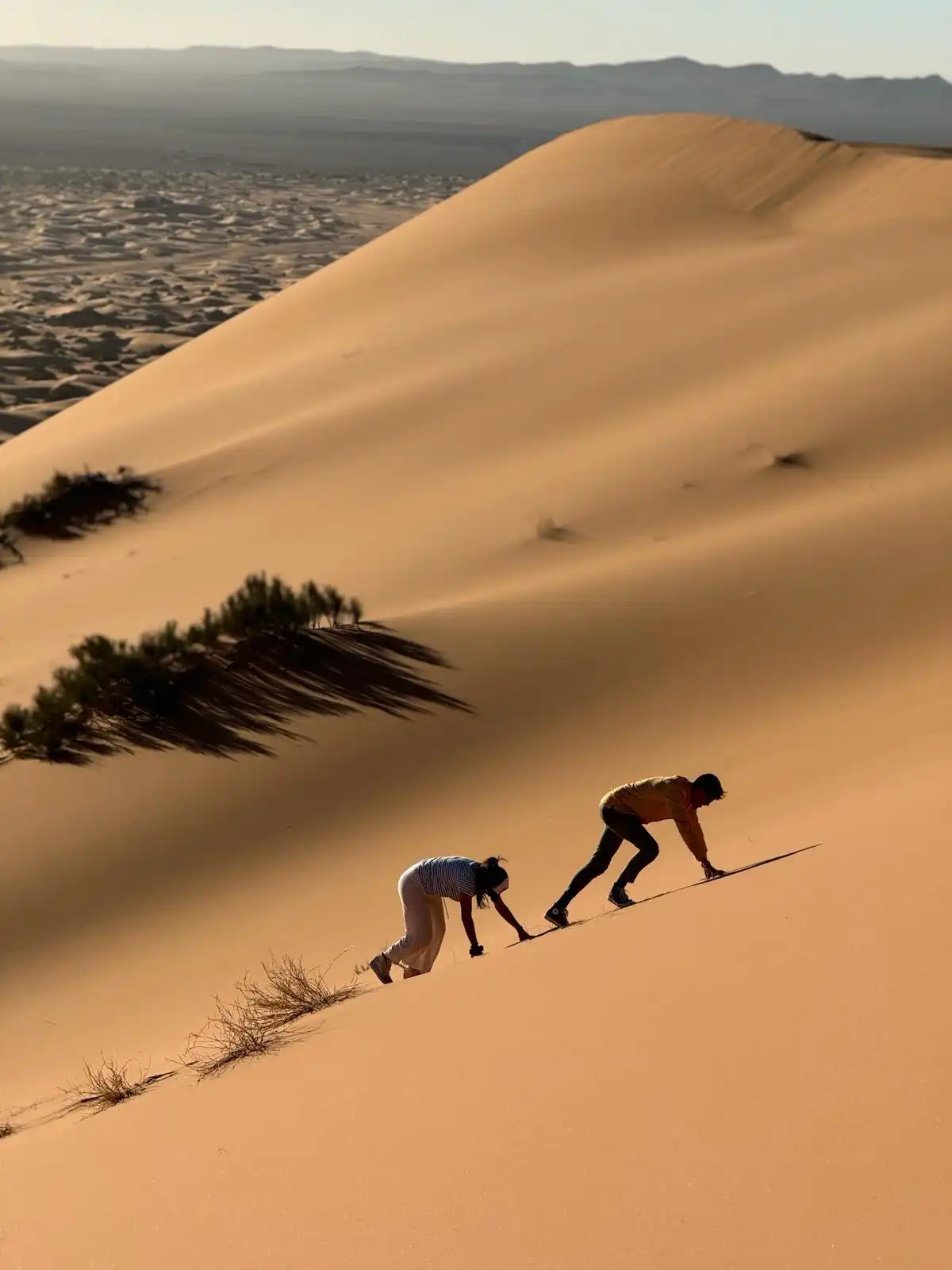
Climb a dune before dawn and watch first light spill across the sand — cold, quiet and worth every early minute.

Sunset

The desert's golden hour, when the dunes glow orange and shadows stretch long across the ridges.

Sandboarding

Slide down the face of a dune on a board — a fun, free add-on that kids and adults both love.

Stargazing

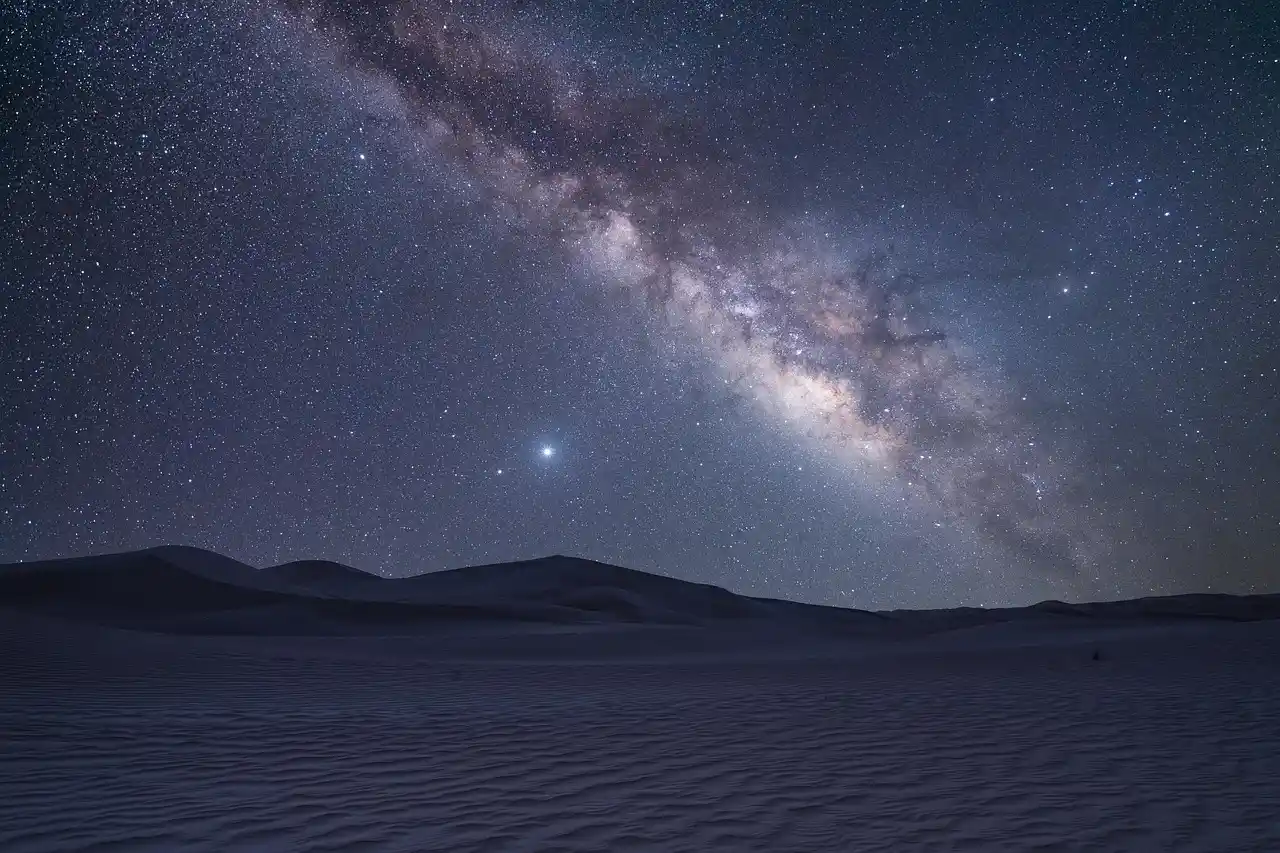
With almost no light pollution, the night sky fills with stars and the Milky Way arches overhead.

Local Music

Berber drums and Gnawa rhythms around the fire — the soundtrack of a Sahara evening.

Nomad Culture

Share mint tea with a nomad family and learn how people have lived in this landscape for centuries.

How to Visit the Sahara

There is no single "right" Sahara trip — it depends on your time, your budget and how much of Morocco you want to see along the way. Below are the main ways to reach the desert, from a quick two-day dash to a two-week grand tour. This page only introduces them; follow the links to the full itineraries.

2 Days · 1 Night

Zagora quick trip

The fastest way to sleep in the desert. Cross the Atlas to the Draa Valley, ride a camel into the Zagora dunes and camp overnight. Ideal if you're short on time. See the 2-day Zagora desert tour.

3 Days · 2 Nights

Marrakech to Merzouga

The most popular Sahara trip and the sweet spot for most travellers — Aït Ben Haddou, the Dades Valley, Todra Gorge and a night at the big Erg Chebbi dunes. See the 3-day Merzouga tour or the deeper Marrakech desert tour guide.

4–5 Days

Desert + imperial cities

Cross the dunes once, with no backtracking, on a one-way route that finishes in a different city — such as the 5-day Marrakech to Fes desert tour, combining the Sahara with Fes.

7–14 Days

Grand circuits

Weave the Sahara into a full loop of Morocco — imperial cities, mountains, coast and desert — on a 7-day or 10-day grand tour, or design your own on our circuits page.

Private vs Shared

How you travel

A private tour gives you your own vehicle, driver and pace — best for couples, families and groups. A shared tour groups you with other travellers on a fixed itinerary and keeps the cost low — great for solo and budget travellers.

Best Time to Visit

The Sahara is a year-round destination, but each season has a very different character. In short: spring and autumn are ideal, winter is beautiful but cold at night, and summer is intensely hot and built around the cooler edges of the day.

Spring

25–35 °C

Mar – May

Warm, comfortable days and mild nights, with desert flowers after winter rains. One of the two best windows to visit.

★ Best overall

Summer

40 °C+

Jun – Aug

Very hot by day, often above 40 °C. Trips focus on sunset, sunrise and shade; midday is for resting. Warm nights.

Hot — plan around the heat

Autumn

25–35 °C

Sep – Nov

Heat eases into warm, settled days and cool nights — arguably the most reliable time for a desert trip.

★ Best overall

Winter

15–20 °C

Dec – Feb

Pleasant, quiet days and very cold nights near freezing. Stunning clear skies — just pack serious warm layers.

Cold nights, quiet dunes

Sahara Weather

The single most important thing to understand about Sahara weather is the swing between day and night. Sand and dry, cloudless air hold little heat, so temperatures fall sharply after sunset all year round. A day that touches 40 °C in summer can drop to a pleasant evening, while a mild winter afternoon can give way to a night close to freezing. Whatever the season, you will want layers and something genuinely warm for the evening.

Rain is rare — the desert sees only a handful of wet days a year, usually brief downpours in autumn or spring that can green the landscape and fill seasonal lakes. The other weather factor is wind: gusts can lift sand and, occasionally, whip up short sandstorms, so a scarf to cover your face and protect your camera is always worth carrying. Skies are otherwise famously clear, which is what makes the light — and the stargazing — so extraordinary.

Rule of thumb: whatever the daytime temperature, expect the night to feel 10–20 °C colder in the open desert. Even in summer, bring a light jacket for the evening at camp; in winter, bring a proper warm coat, hat and gloves.

Sahara Packing Guide

You only need a small overnight bag for the desert camp — your main luggage stays safely in the vehicle. Pack light, breathable layers for the day, something warm for the night, and protection from sun, sand and wind. Here is the essential checklist.

Clothing

  • Light, breathable layers for daytime heat
  • Warm jacket or fleece for cold nights
  • Long trousers & long sleeves (sun & culture)
  • Closed shoes for walking, plus sandals for sand
  • Scarf or headwrap for sun & wind
  • Gloves & a warm hat in winter

Sun & Health

  • High-factor sunscreen & lip balm
  • Sunglasses & a wide-brim hat
  • Refillable water bottle — stay hydrated
  • Any personal medication
  • Basic first-aid items & hand sanitiser
  • Wet wipes & tissues

Gear & Extras

  • Camera or phone for the dunes & stars
  • Power bank — limited electricity at camps
  • Small torch or headlamp
  • Cash for tips & small purchases
  • Small daypack for the camel trek
  • A book, and a sense of wonder

Want the full country-wide list by season? Read our what to pack for Morocco guide.

Desert Camps

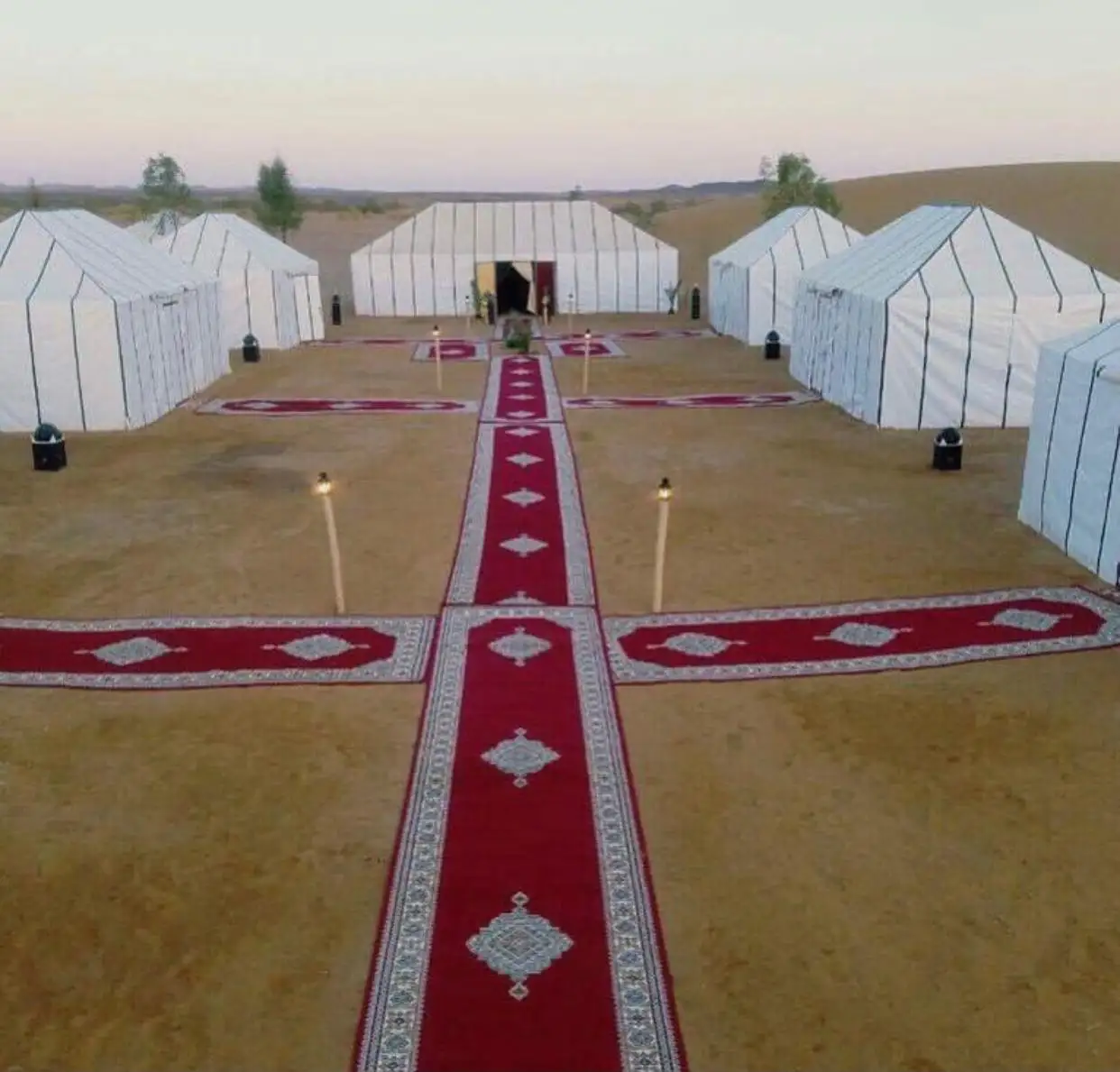
Tents of a Sahara desert camp lit up at night among the dunes at Erg Chebbi, Morocco

Spending the night in a desert camp is the heart of a Sahara trip. After your sunset camel trek you arrive at a cluster of tents nestled among the dunes, share a traditional Moroccan dinner, gather round the fire for music, and sleep beneath the stars. Camps come in two broad styles, and you can upgrade on almost any tour.

Standard camps

Comfortable and atmospheric, with simple tents, real beds or mattresses and shared bathroom facilities. They keep costs low and put you right among the dunes — perfect for travellers who care more about the experience than the amenities.

Luxury camps

Spacious private tents with proper beds, en-suite bathrooms, electricity and fine dining. A luxury camp turns the desert night into a boutique-hotel experience without losing the magic of sleeping in the Sahara — ideal for couples, honeymooners and families who want extra comfort.

FeatureStandard CampLuxury Camp
BathroomShared facilitiesPrivate en-suite
BedsSimple beds / mattressesProper beds & linens
ElectricityLimited / solarYes, in tent
DiningTraditional group dinnerUpgraded, often private
Best forBudget & authentic feelComfort, couples, families

Berber & Nomadic Culture

The Sahara is not empty — it is home. The people of southern Morocco are mainly Amazigh (Berber), the indigenous inhabitants of North Africa, alongside communities of Saharawi and Haratin heritage and families who still live as nomads, moving with their goats and camels between grazing grounds and wells. Understanding this human landscape is part of what turns a desert trip into something deeper than a photo stop.

Hospitality is sacred here. You may be welcomed into a nomad tent for a glass of sweet mint tea, learn how bread is baked in the sand, or watch a family draw water from a desert well. In the Merzouga area you will also meet the Gnawa — descendants of West Africans whose hypnotic, spiritual music, played on the guembri and metal castanets, is woven into desert evenings around the fire.

Travelling respectfully matters: dress modestly, ask before photographing people, and buy directly from local artisans and camps so your visit supports the communities who make the desert what it is.

Traditional Moroccan mint tea being poured, a symbol of Berber and nomad hospitality in the Sahara

Sahara Safety Tips

The tourist areas of the Moroccan Sahara — Merzouga, Zagora and the Draa Valley — are well established and very safe to visit. The real risks in the desert are natural rather than human: the sun, the heat, the cold nights and the sheer scale of the landscape. A little preparation keeps a desert trip both safe and comfortable.

Stay Hydrated

Drink more water than you think you need and avoid alcohol in the heat. Dehydration is the most common desert problem.

Respect the Sun

Cover up, wear sunscreen, a hat and sunglasses, and avoid strenuous activity in the midday heat, especially in summer.

Go With a Guide

Don't drive or hike deep into the dunes alone. An experienced local driver-guide knows the terrain, weather and routes.

Prepare for the Cold

Desert nights are far colder than the days. Always carry a warm layer, even on a hot summer trip.

Mind the Sand

Dunes are steep and tiring. Shake out shoes for scorpions in warm months, and protect gear from fine, blowing sand.

Manage Expectations

Phone signal and electricity are limited at camps. Tell someone your plans and carry a power bank and a little cash.

The simplest safeguard is to travel with a reputable local operator and a well-run camp. With the right driver, water and warm layers, the Sahara is one of the most rewarding — and genuinely safe — places you can visit in Morocco.

Frequently Asked Questions

The Sahara lies along the south and south-east of Morocco, where the country meets Algeria. The most visited part is the Erg Chebbi dune field beside Merzouga, about 560 km and 9–10 hours' drive from Marrakech. Further west is the Draa Valley and Zagora, roughly 360 km and 7 hours away, and beyond it the remote Erg Chigaga dunes near M'hamid. Most trips begin in Marrakech, Fes or Ouarzazate and cross the High Atlas to reach the sand.
Merzouga is better for the classic Sahara — the Erg Chebbi dunes rise up to ~150 m and are far more dramatic than Zagora's, with the best camps and stargazing, but it needs at least 3 days. Zagora is closer (about 7 hours) and can be done in 2 days, so it's the better choice if you're short on time but still want a night in the desert and a camel ride. See the full Merzouga vs Zagora comparison above.
Erg Chebbi, beside Merzouga, is the famous and accessible dune field — tall golden dunes right at the edge of a paved road. Erg Chigaga, near M'hamid, is larger, wilder and far more remote, reached only by a 1.5–2 hour 4x4 crossing, so it sees few visitors and feels truly off-grid. Choose Erg Chebbi for convenience and iconic scenery, Erg Chigaga for adventure and solitude.
Spring (March–May) and autumn (September–November) are ideal, with warm days and cool nights. Winter (December–February) is pleasant and quiet by day but cold at night. Summer (June–August) is very hot, often above 40 °C, so trips focus on sunset, sunrise and the cooler edges of the day. The desert is beautiful year-round — the season simply changes what you pack and how you plan the day.
A minimum of 2 days for a Zagora trip or 3 days for a Merzouga trip to the Erg Chebbi dunes. Two days gives a quick taste with one night in a camp; three days is the sweet spot, with a relaxed Atlas crossing and stops at Aït Ben Haddou, the Dades Valley and Todra Gorge. To combine the desert with the imperial cities, a 5-day Marrakech to Fes route or a 7–10 day grand tour works well.
In summer, daytime temperatures regularly exceed 40 °C; in spring and autumn they're a comfortable 25–35 °C. Because sand and clear skies lose heat quickly after sunset, nights are far cooler than the days all year — pleasant in summer but genuinely cold in winter, sometimes near freezing. This is why layers and a warm jacket are essential even when the day is hot.
Light, breathable layers for the day and a warm jacket for the cold night. Bring closed shoes plus sandals, sunglasses, a hat or scarf, high-factor sunscreen and lip balm, a refillable water bottle, medication, a power bank and a camera. A scarf doubles as sun and wind protection on the camel trek. You only need an overnight bag for the camp; main luggage stays in the vehicle. See the full packing checklist above.
Yes — a sunset camel trek and at least one night in a desert camp are standard on Merzouga and Zagora trips. You ride into the dunes in the late afternoon, watch the sunset, spend the night with a Moroccan dinner, music and stargazing, then ride back at sunrise. Camps range from comfortable standard tents to luxury en-suite camps, and you can upgrade on any trip. If you'd rather not ride, you can walk or take a 4x4 to camp instead.
Yes. The main tourist areas — Merzouga, Zagora and the Draa Valley — are well established, welcoming and very safe, including for families. The practical risks are natural rather than human: sun, heat, dehydration and cold nights. Travelling with an experienced local driver and a reputable camp, carrying enough water, protecting yourself from the sun and following your guide's advice keeps a desert trip safe and comfortable. Visit the deep desert with a guide rather than driving off-road alone.
Yes — the Sahara is one of the best stargazing spots on earth. With almost no light pollution, dry air and open skies, the nights reveal thousands of stars, the Milky Way and shooting stars. Stargazing is a highlight of an overnight in a desert camp, especially in the remote area around Erg Chigaga. New-moon nights are darkest and best for the Milky Way; a full moon lights the dunes beautifully but hides the faintest stars.
The people of the Moroccan Sahara are mainly Amazigh (Berber), the indigenous population of North Africa, along with Saharawi and Haratin communities and some nomadic families who still move with their herds. Around Merzouga you'll also meet Gnawa musicians, descendants of West Africans, whose music is part of desert evenings. Sharing tea with a nomad family, visiting a village or hearing Berber and Gnawa music around the fire are among the most memorable parts of a trip. Read more in the culture chapter above.
Most travellers reach the Sahara from Marrakech by road, crossing the High Atlas over the Tizi n'Tichka pass and following the Road of a Thousand Kasbahs south. Merzouga is a 9–10 hour drive, usually split over an organised tour with stops at Aït Ben Haddou, Ouarzazate, the Dades Valley and Todra Gorge; Zagora is around 7 hours via the Draa Valley. You can go by private tour with your own driver, a shared group tour, or self-drive — a driver-guide is the most relaxed option. You can also arrange a Marrakech to Merzouga transfer.

Ready to turn the Sahara into a real trip? These pages take you deeper into each route and experience.

Ready to Cross the Dunes?

Tell us your dates and how long you have, and our local team in Marrakech will design the Sahara trip that fits — Merzouga or Zagora, shared or private, standard or luxury camp.